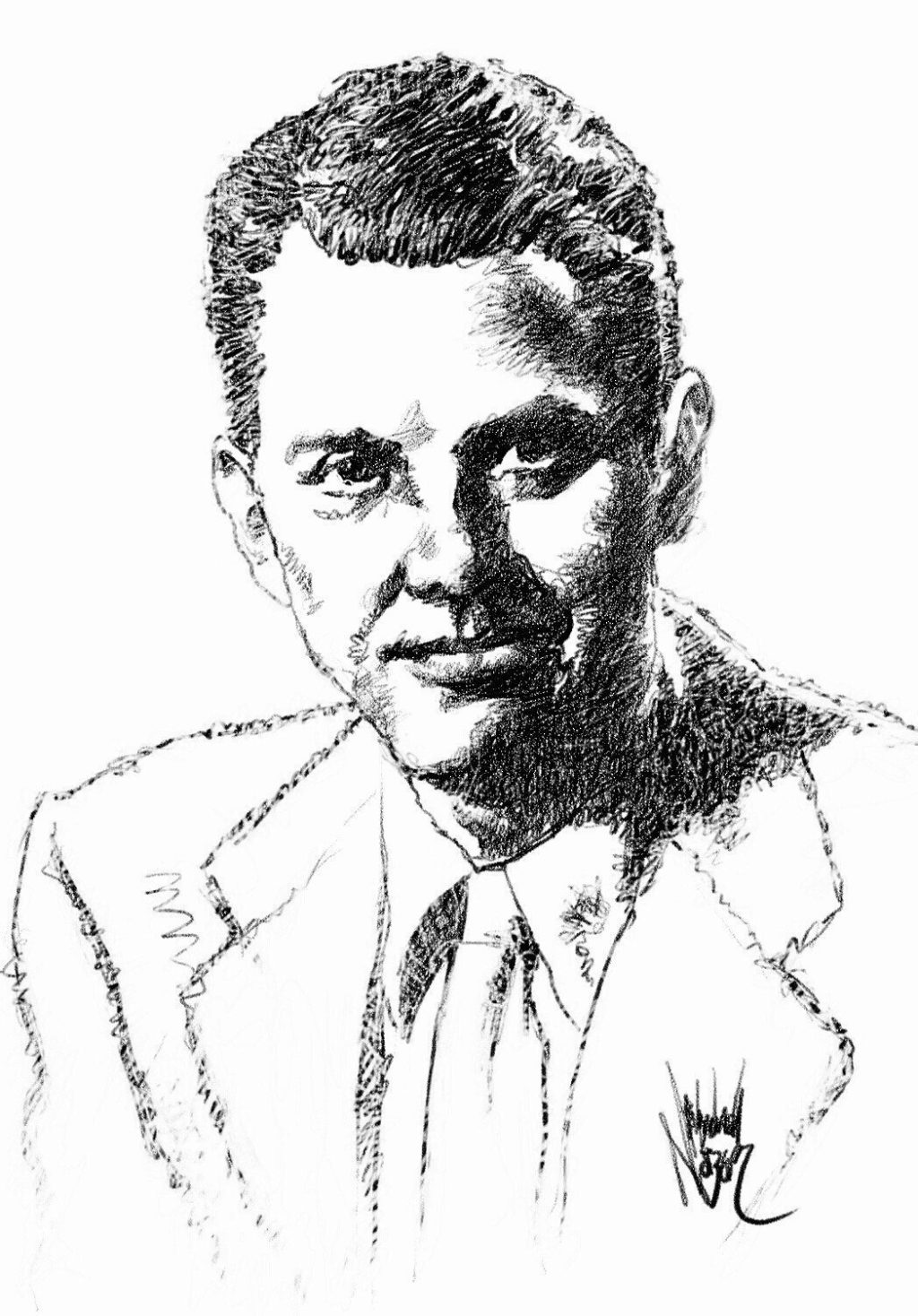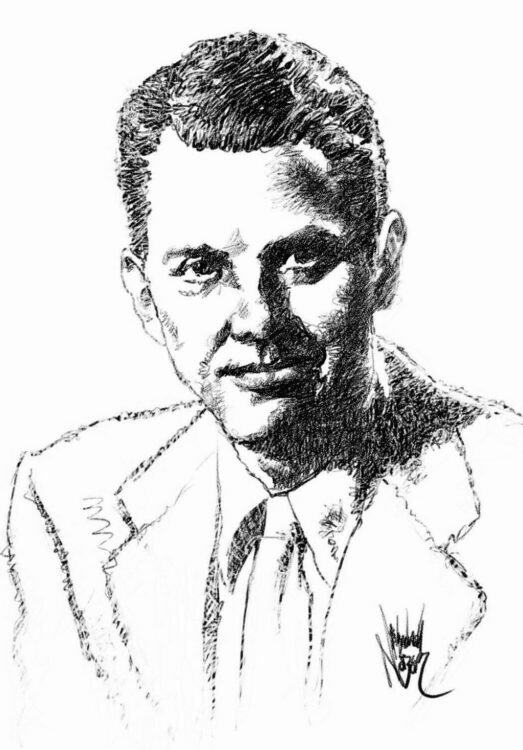
Wayne Boring by Michael Netzer
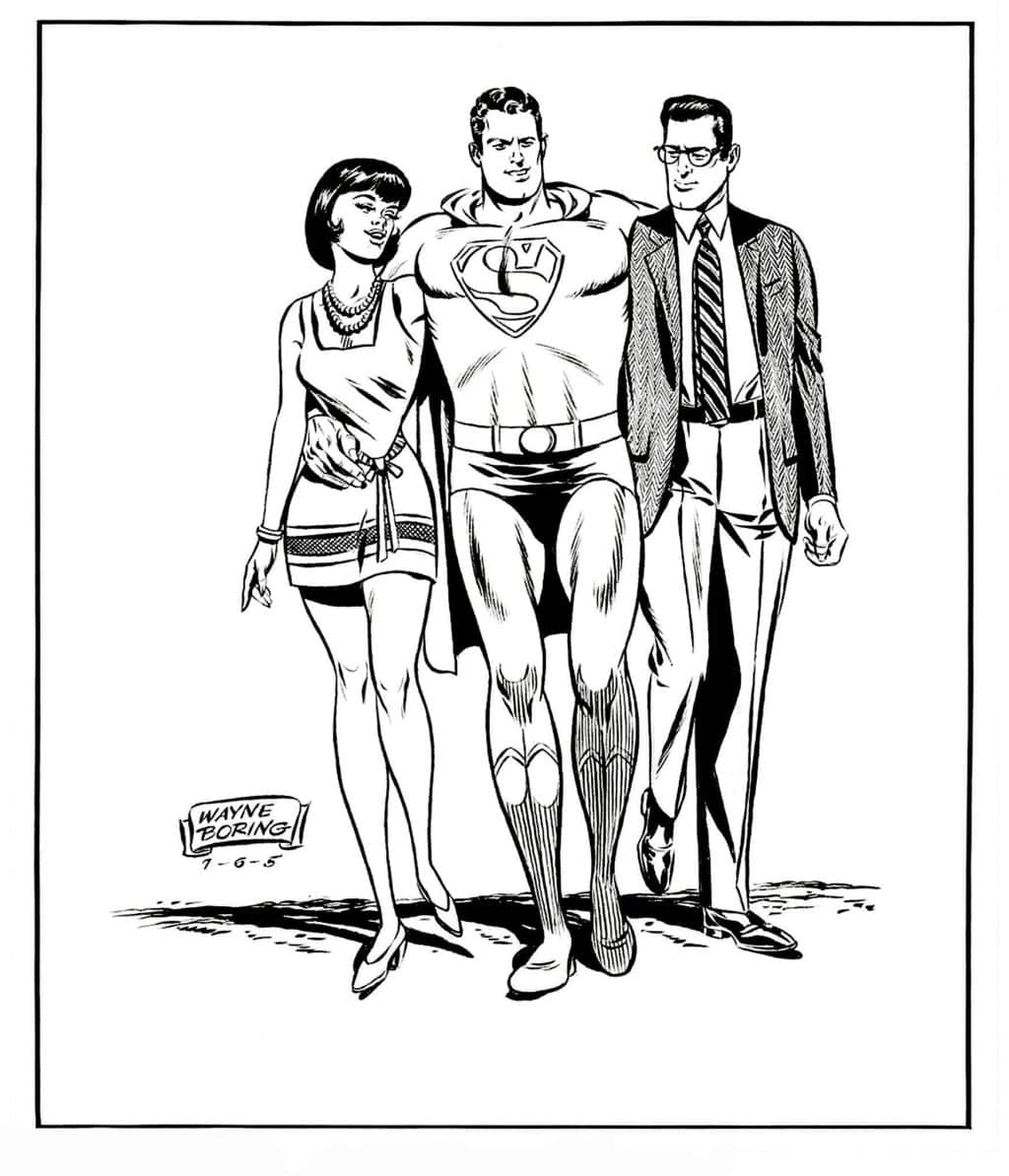
The legendary Wayne Boring was born on June 5, 1905 in Minnesota and though his name isn’t often trotted out these days when comic fans make “all-time greatest” lists, he played a hugely important role in the development of The DC Universe and created a look for Jerry Siegel and Joe Shuster’s Superman that would define the mighty superhero for the post-war generation and the many decades to come!!!!
*
Wayne Boring learned to create such mesmerizing pieces of artwork by attending the Minnesota School of Art and the Chicago Art Institute. Originally brought on by Jerry Siegel, Boring began “ghosting” (drawing for hire without credit) for Superman’s other co-creator Joe Shuster in 1937, he worked on such comic book features as Slam Bradley and Doctor Occult for The Jerry Siegel-Joe Shuster Studio in Cleveland, Ohio. The reason that Boring was brought on was because of the workload that Shuster had to accomplish was quite overwhelming and exhausting, not due to Shuster’s failing eyesight, which would later be a problem for Shuster.
*
In 1938, Jerry Siegel and Joe Shuster’s Superman was published in Action Comics #1 for the DC Comics predecessor, National Allied Publications. Boring was hired as a staff artist by National Allied Publishing in 1942 and started to ghost for Joe Shuster on the Superman newspaper strip and took over as the character’s primary artist, eventually becoming the credited artist and teaming him as penciler the following year with inker Stan Kaye. The two would work together for nearly twenty years during a period fans and historians call the Golden Age of comic books.
*
Shortly after that, Boring started pencilling long runs on both Action Comics and the eponymous Superman series over the next decade-and-a-half, including the cover art for Superboy #1 (March–April 1949). In 1948, following Siegel and Shuster’s departure from the company over a Superman rights lawsuit, Mort Weisinger, new editor of the Superman line, brought in Boring as well as Al Plastino and Curt Swan. During this mid-1940’s period, Boring often signed his work for rival Novelty Press Blue Bolt Comics under his pseudonym, Jack Harmon.
*
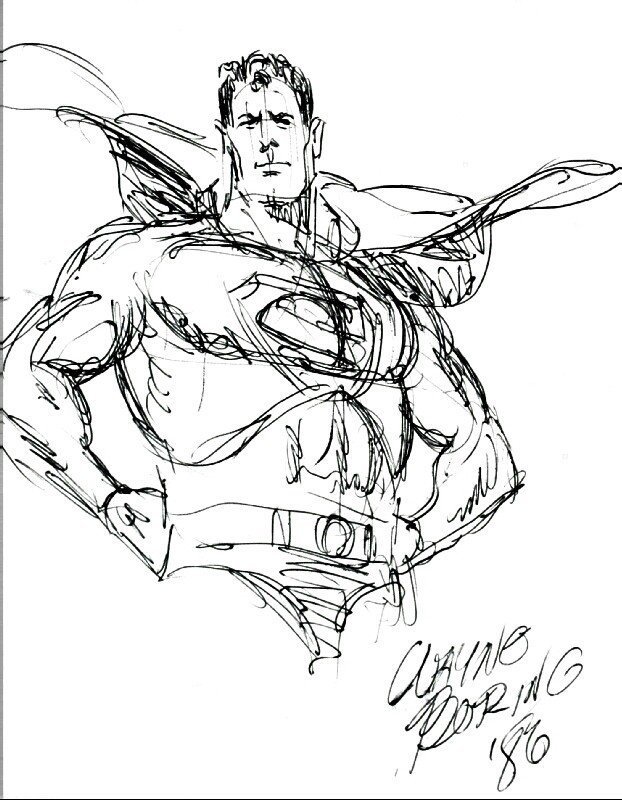
In the process, Boring imbued The Last Son of Krypton with a finesse that he’d previously lacked, taking Shuster’s stocky circus strongman and molding him into an icon of classical heroism — replacing the square-jawed brawler with a larger-than-life figure with chiseled features, well-defined musculature and a movie-star smile.
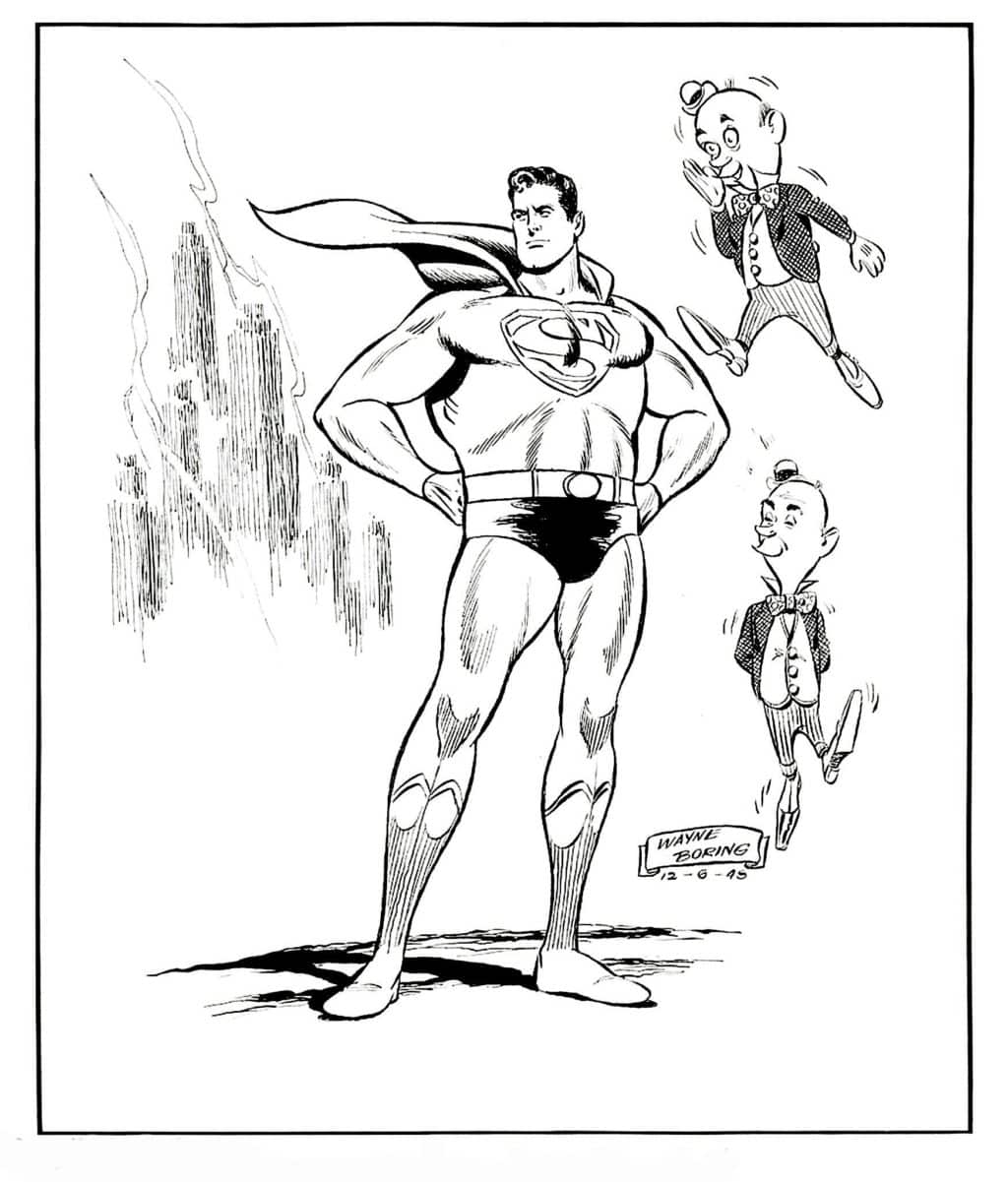
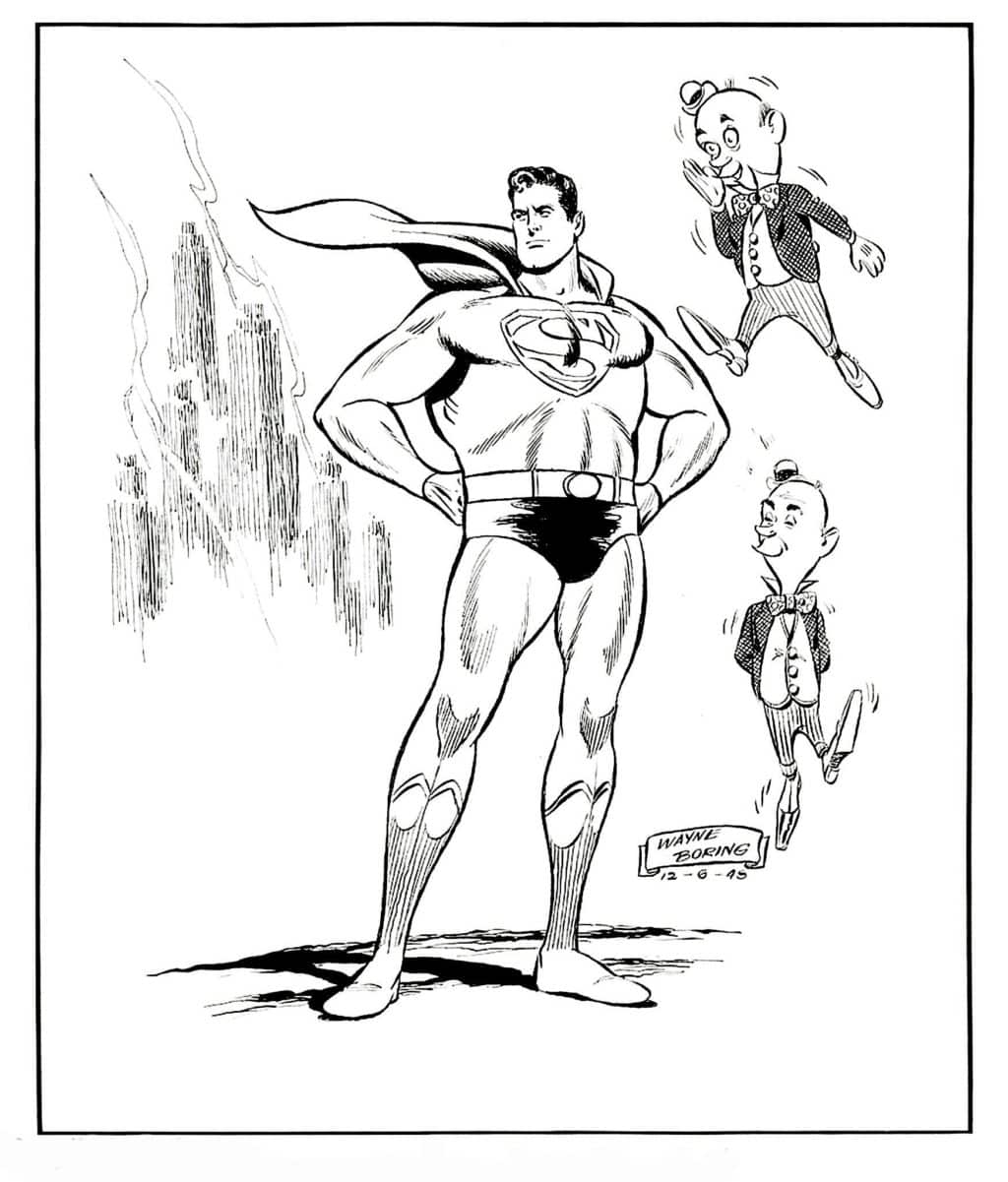
Wayne Boring – Superman and Mr. Mxyzptlk Sketch Original Art (1948). Wayne Boring’s vision of The Man of Steel was so distinctive and powerful, it eventually became the established version of the 1940’s and 1950’s, displaced only when the amazing Curt Swan assumed stewardship of this SUPER icon in the early 1960’s. This fabulous drawing from 1948 showcases the appeal of Boring’s approach. The mighty Superman’s massive chest and arms, thick waist and powerful, firmly set jaw, leave no doubt as to his incredible strength and noble bearing.
*
This new portrayal proved key to the reinvention of Superman as an increasingly powerful and grandiose figure, less “man” and more “SUPER”. No longer content with juggling hoodlums, he could now combat intergalactic threats without batting an eyelash. While this remove from reality made Superman less relatable, it also helped set him apart from his peers and probably contributed to the feature’s survival. The late 1940’s and early 1950’s were an odd time for comics, when superheroes were in a slump, their titles being replaced and repossessed by new styles of genre fiction. Romance, westerns, crime, horror, sci-fi and humor were the order of the day.
*
National Periodical Publications (today DC Comics), like most publishers, was trying to figure out the new status quo and experimenting with all manner of different approaches. When noted jackass Dr. Fredric Wertham’s moron campaign against comic books started to gain widespread notice and the accompanying congressional hearings on comics and juvenile delinquency took place, the few titles that maintained their identity were scrubbed to a squeaky-clean finish, removing any traces of real world content in favor of spectacular (and often silly) larger-than-life stories and Boring’s elegant line was essential to making all these elements fit together and keeping the Superman franchise afloat, depicting both the silliness and solemnity of The Silver Age with immaculate draftsmanship and perfectly-rendered faces, bringing a new illustrative beauty to the trials and travails of The Man of Steel.
*